
What Is Nervous System Regulation? A Gentle Guide for Beginners
Written By Elizabeth Robb
Published on: 10/23/2026
Lebanon, PA - If you’ve been scrolling past the phrase “nervous system regulation” and wondering what it actually means, you’re in good company. It sounds technical. It isn’t. It’s a way of describing something most of us already know from the inside: the difference between a day where your body feels steady and a day where it feels like it’s bracing for something.
This post is a plain-language starting point. It’s educational and reflective, not medical advice, and it’s meant to be read slowly.
So, What Is Nervous System Regulation?
Your nervous system is constantly scanning your surroundings, asking one basic question: Am I safe right now?Depending on the answer, your body shifts between two broad states.
Stress mode
This is sometimes called sympathetic activation. Heart rate goes up, muscles tighten, and digestion takes a back seat. This response is protective, and it’s useful when something genuinely needs your attention.
Repair mode
This is sometimes called parasympathetic activation. Heart rate slows, breathing deepens, and your body shifts toward rest and digestion. It isn’t laziness. It’s the state where your body does its quiet, everyday maintenance.
Regulation simply means your system can move between these states with some flexibility: ramping up when you need to, and settling back down afterward. Dysregulation is a word for when settling down gets harder than it used to be. It isn’t a flaw or a weakness. For many people, it’s an adaptation to a lot of pressure for a long time.
Why Settling Down Can Feel So Hard
Modern stress rarely wraps itself up neatly. Deadlines, money worries, tense conversations, and constant notifications don’t have a clear “all done” moment. When there’s always something pending, your body may stay a little bit on guard, even on a quiet afternoon.
That’s why so many people say things like “I’m exhausted, but I can’t relax.” It doesn’t mean you’re doing rest wrong. It may mean your body hasn’t had a lot of cues that it’s safe to stand down.
What a Subtly Stressed Day Can Look Like
Here’s a day many people will recognize. Nothing dramatic happens in it.
You reach for your phone before you’ve sat up. Your mind starts running your to-do list while you pour coffee. Lunch happens at your desk, and your jaw clenches somewhere in the middle of an email thread. By afternoon, small things feel bigger than they should. In the evening you’re tired but wired, and you scroll until you finally fall asleep.
Many people describe living this way for years without ever calling it stress, because no single moment looked like a crisis. People often say they only notice how much tension they’ve been carrying when they finally get a chance to slow down.
If you’d like to put names to some of these patterns, our free guide, Listening Within, walks through them gently, with no sign-up needed.
How Stress, Sleep, and Energy Influence Each Other
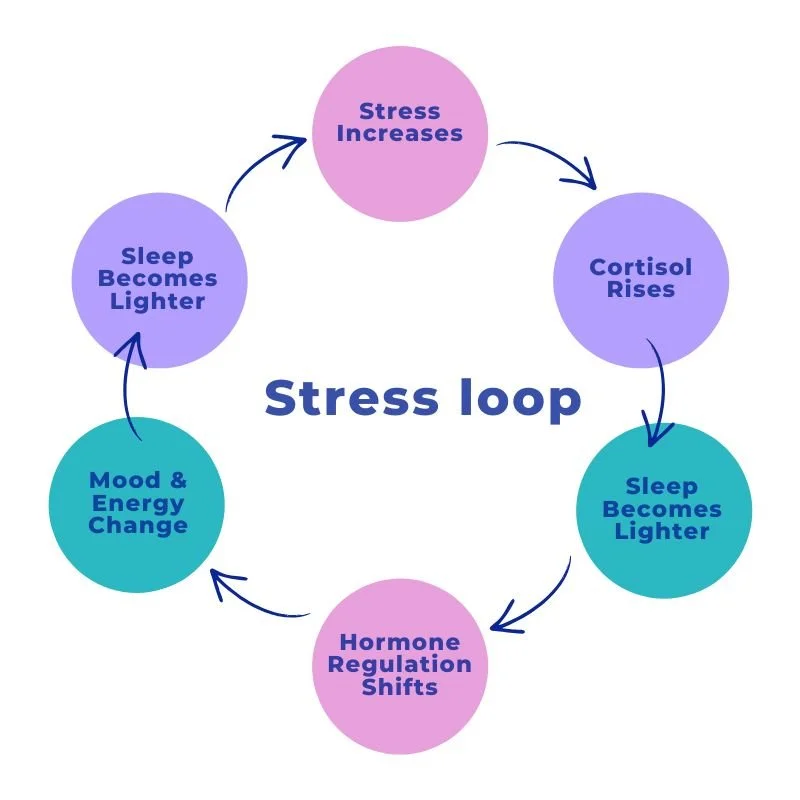
One reason this topic gets so much attention in holistic wellness is that the body works as a connected system. Sleep, digestion, mood, muscle tension, anhttps://greater-wellness-holistics.squarespace.com/free-wellness-guided energy all influence one another. When stress runs high, sleep can feel lighter. When sleep is lighter, mood and energy can shift. And when energy dips, everyday stress can feel heavier. It can become a loop.
That’s the reason holistic wellness tends to look at patterns instead of single symptoms. It’s meant to work alongside medical care, never in place of it. If something is worrying you, a conversation with your healthcare provider is always a good step.
If you’ve ever wondered why so many things you’ve tried only helped for a little while, our post on what to do when something feels “off” but you can’t explain why goes deeper on that feeling. And if your tiredness tends to come with the seasons, you might also like why you still feel tired in spring.

Simple 3-Minute Practice to Try Right Now
You don’t need any equipment. This is a gentle breathing practice from the guide.
Sit somewhere comfortable and place one hand on your chest and one on your abdomen.
Breathe in slowly through your nose for a count of four.
Breathe out gently through your mouth for a count of six.
Repeat five times.
Then simply notice. Did your shoulders soften? Did your jaw let go a little? Did your breath get a bit deeper? You’re not trying to get it right. If you feel lightheaded or uncomfortable at any point, return to your normal breathing and stop.
That small shift is a tiny example of what people mean by regulation.
What Holistic Approaches Offer
Many people explore practices like breathwork, Reiki, sound healing, massage, somatic movement, and nutrition-focused support as ways to give their bodies time and space to slow down. These aren’t quick fixes, and none of them promise a particular result. What people commonly describe is that they create a calm setting where it’s easier to notice how they feel and rest more fully.
Everyone responds differently, which is exactly why trying things for yourself can be so helpful.
Try It in Person at the Expo
Reading can help you understand an idea. Experiencing it is something else. At the Greater Wellness Holistics Expo you can try a mini session, ask practitioners how their approach works, and take your time deciding what resonates, all in a relaxed, welcoming setting.
Our next expo is Saturday, April 3, 2027, 10 AM to 4 PM at the Lebanon Valley Expo Center. Grab your ticket here, and use code LISTEN for $2 off. Many people come just to explore, and that’s enough.
A Few Ways to Keep Exploring
If you’re newer to holistic wellness, our guide to starting your holistic wellness journey in Pennsylvania is a good next read. If you’re curious about local practitioners, you can browse our trusted wellness practitioners in Lebanon, PA, or see what else is happening on our upcoming wellness events in PA page.
Where to Begin
You don’t need to understand everything or be in crisis to start paying attention. Noticing is enough.
If any part of this felt familiar, download the free Listening Within guide. It’s a gentle beginner’s guide to stress, the nervous system, and holistic wellness. And whenever you’re ready to feel it for yourself, we’d love to see you at the expo. Get your ticket.

